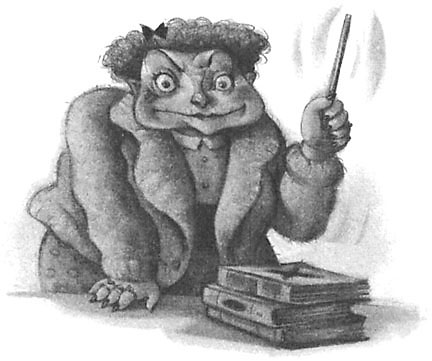
You can hear the entire interview here.
 BB NOTE: Here's another editorial on the current litigation by Warner Brothers against the creator of the award-winning HP Lexicon.
Why not, in the years of your great maturity, exhale a modicum of kindliness to others, endeavoring to do their bit? No one can afford it so well as yourself. But alas, you are not endowed with so human an element, only with a curious quality of vanity, and a rather vulgar and childish egotism. You seem to have it in your mind that you yourself do your work, whereas the impulses are much deeper and more universal than the mere ego which you adore.Here is the editorial by Marina Hyde of The Guardian:
Though they have been spared any collisions with perspex footwear, Ms Rowling and Warner Bros, who make the Harry Potter movies, are suing to block publication of the The Harry Potter Lexicon, an encyclopedia of her wizarding world based on a long-established fan website of the same name. Its creator, one Steve Vander Ark, wept in court after Rowling accused him of "constant pilfering" and "utter laziness". On the other hand, she did concede she had previously given an award to the site, and used it as a fact-checking resource. There were tears on her part too, and it all seemed completely unnecessary.
Of course, it wouldn't be the first time that Warner Bros has been involved in a pettily protectionist copyright case. Do let's recall that brilliant letter Groucho Marx penned to the studio - makers of Casablanca - after he received an "ominous legal document" warning the Marxes off calling their movie A Night in Casablanca. "I had no idea that the city of Casablanca belonged exclusively to Warner Brothers," he deadpanned. "I am sure that the average movie fan could learn in time to distinguish between Ingrid Bergman and Harpo ... What about Warner Brothers? Do you own that too? You probably have the right to use the name Warner, but what about the name Brothers? Professionally, we were brothers long before you ..."
The case was eventually dropped. And it came to pass that moviegoers were indeed perfectly able to distinguish between Ingrid and Harpo - just as one suspects Harry Potter fans will be able to distinguish between JK Rowling's work and that of Mr Vander Ark.
We could all use a guide as to how the digital revolution has changed the world, but one safe-ish bet is to trust that quality rises to the top, and no matter how many Harry Potter fan "tributes" are sloshing about, interest in them will be dwarfed by that in the genuine article. What on earth is the difference between this stuff being on the internet or available to purchase in a book? The author might aver that in the latter case, money is being made by someone other than her - but the website has long carried advertising, so that seems moot. Vander Ark's publisher wanted a print run of 10,000; were Rowling to publish a lexicon, the first print run has been estimated at 3m.
"I believe the floodgates will open," she said this week, as though this sort of fan fiction could possibly be a problem for anyone other than creators of vast global phenomena. "I see this as an incredibly important case."
Alas, the judge was less convinced. In fact, in the course of advising the parties to settle, he referenced Jarndyce and Jarndyce, the long-running case featured in Bleak House that has become a byword for pointless and interminable litigation. He appears to have done so without requesting official permission from the estate of Charles Dickens. Judge Patterson confessed that he had enountered so many neologisms when reading one Harry Potter volume that he found it "gibberish" - marking himself out as one of that rare breed of adults who do not read these children's books on public transport wearing a moony expression. They opt for the special adult covers, or what we might call "the enabler edition".
As for Ms Rowling's argument that her work is being "debased", that position may be very compromised by this time next year, because she has given her blessing to the construction of a Harry Potter theme park in bookish Orlando, Florida. Bertie Bott's Tenth Circle of Hell ... I'm so sorry, The Wizarding World of Harry Potter will open next year, and the trailer website promises the chance to visit "Hogsmeade TM" and Hogwarts TM Castle", among other zones "inspired by" the Harry Potter books.
This, says the official blurb, "will provide fans with another way to experience the world beyond the books and films". And so it will: as some injection-moulded theme park, punctuated by those endless Disney-esque stands selling supersized fast food, and attempts to chisel cash out of you - or "experiential shops", as they have it. So when JK Rowling takes her first spin on the Cruciatus-a-Coaster, or whatever the big thrill ride will be called, here's hoping she looks back on Mr Vander Ark, and realises his modest fan project was not quite as ghastly as she made out.
 From here.
Earlier this year, we wrote about how J.K. Rowling's lawsuit against the publishers of a guidebook about Harry Potter's universe was extremely misguided. That lawsuit got a lot more attention Tuesday, as Rowling herself showed up in court to play an emotional, rather than legal, strategy. The NY Times even reports that she was "stoically holding back tears." Cry me a river. Rowling is basically trying to get copyright law to do a lot more than it is intended to do -- and all of her emotional bunk doesn't change that. Claiming that the "stress and heartache" of such a publication had hurt her creativity for the last month seems excessively questionable. Furthermore, it doesn't change the fact that a derivative work, such as this guidebook, doesn't violate copyright. There are lot of things that cause me stress and heartache and which might make me lose my concentration. It doesn't make them illegal.
It appears that the publisher's lawyer had some fun, pointing out that Rowling didn't seem to have that same sort of stress and heartache when she gave an award to the website that "The Harry Potter Lexicon" came from. And, when presented with evidence of how the book took Harry Potter details and did more with them (making them more useful), Rowling tossed out the following: "This is theft. Wholesale theft." Well, no, it's not. If it were anything, it would be infringement (not theft), but more importantly, it wasn't about republishing the content, but making it more useful. It's the same argument we discussed recently with people overestimating the value of the content, and underestimating the value of the service of making it useful. The most damning point might be that Rowling herself in the past admitted to using the lexicon to check up on facts she didn't remember.
However, the real key point that Rowling went back to again and again in her complaint is that she just didn't think the quality of the Lexicon was very good. That seems like a bizarre complaint, as copyright has nothing to do with quality. In fact, as the publisher's lawyer asked, "You feel it's your responsibility to prevent people from paying their hard-earned cash for things you don't like?" At which point, she switched arguments again, reverting to the claim that it was "theft." Of course, if she really thinks that the book is awful, there's a really easy solution: to come out with her own version of a guidebook. Surely, people would be a lot more interested in buying the "official" version, written with Rowling's approval, than some fan-created one. In fact, Rowling admits that she's been thinking of doing exactly that (and throws in the totally separate from the legal issues, but good for an emotional tug, claim that she would donate all proceeds to charity). Of course, there's nothing actually stopping her from competing, other than what appears to be her own unwillingness to actually have to compete for readers.

Is “Weak Waggishness” a Legal Conclusion? The plaintiffs (author J.K. Rowling and Warner Bros.) called their literature expert, Jeri Johnson, a “senior tutor” (that’s like an academic dean) from Oxford. Johnson, whose title was constantly confused by the lawyers — mis-addressing her alternatively as Don, Dean, and Doctor (she has no doctorate) — testified in broad generalities, concluding that entries in the Lexicon don’t add new “layers of meaning” to Rowling’s novels, and merely rearrange Rowling’s intellectual “furniture.”
Unimpressed, Judge Robert Patterson interrupted. “It’s not helpful testimony because it draws conclusions without specifics,” he said. “I can’t simply take the expert’s opinion as my own.”
Then, when David Hammer — lead attorney for defendant publisher RDR who handled every witness examination — crossed Johnson, her testimony simply unraveled.
Hammer pressed Johnson on her previous statements that the H.P. Lexicon is “weak waggishness,” that its jokes are “facetious,” “condescending in the extreme” and amount to “tedious jocularity.” Hammer got Johnson to agree that what’s obvious or facile to an academic dean at Oxford might not be so to children — presumably the Lexicon’s main audience. He asked: Could a work be useful to a 10 year-old even if it’s not something she would classify as a work of academic scholarship? “Yes,” she said. “No more questions,” he said.
Does the Lexicon Take the Best Crumbs of Rowling’s Cake? The problem of generalities continued to plague the plaintiffs when Rowling, the first witness in the case, took the stand in rebuttal as the trial’s final witness. Comparing her novels to a cake, Rowling claimed that the Lexicon takes all the best “crumbs,” repackages them and sells them for “entertainment value.”
Again, Judge Patterson interrupted, and addressed Rowling directly. “Can you imagine anyone reading [the Lexicon] for entertainment value?”
“No,” she replied. “But, without seeming arrogant or vain, there are entertaining things in it — and I wrote them.” Rowling went on to say that, just because she’s been successful, the law shouldn’t grant her less copyright protection. And, if the case is decided in RDR’s favor, she argued, borrowing law school cliches, that it will be a “slippery slope,” “floodgates will open,” “a precedent will be set,” and anyone will be able to “lift an author’s work” and present it as their own.
Law students, refresh our memory, but don’t the profs caution against the slippery slope argument, on the theory that it’s the job of judges and lawmakers to draw lines?
Maybe I Need a Reference Guide for This Case: That was Judge Patterson’s commentary at the close of testimony. Again, he urged the parties to consider settlement, reminding them that fair use is a “murky area” of law. Hammer then requested the opportunity to make a closing statement, which was a good call because his co-counsel, Anthony Falzone, delivered a strong one.
Rowling’s lawyer, O’Melveny’s Dale Cendali, emphasized their main theme, that the Lexicon “takes too much and does too little” but offered little in the way of specifics.
The defense’s Anthony Falzone, a lecturer at Stanford law a who hadn’t spoken since his opening statement, invoked a professorial tone and led the judge through a thorough analysis of RDR’s case. Synthesis and distillation is what makes the Lexicon “tranformative,” he argued. “Quality shouldn’t matter,” he emphasized. If the Lexicon is lousy, Falzone concluded, the answer is not to suppress it, but for Rowling to write her own.
LB’ers: Therein lies the trial’s narrative arc, short of the judge’s decision. Which way should he rule?
 New interview with Steve Vander Ark: